Odoo Partner · Odoo 19 implementation
Your whole business in one platform, with Odoo.
Sales, inventory, finance, projects and people in one connected operation — built around your processes, not bolted on top of them.
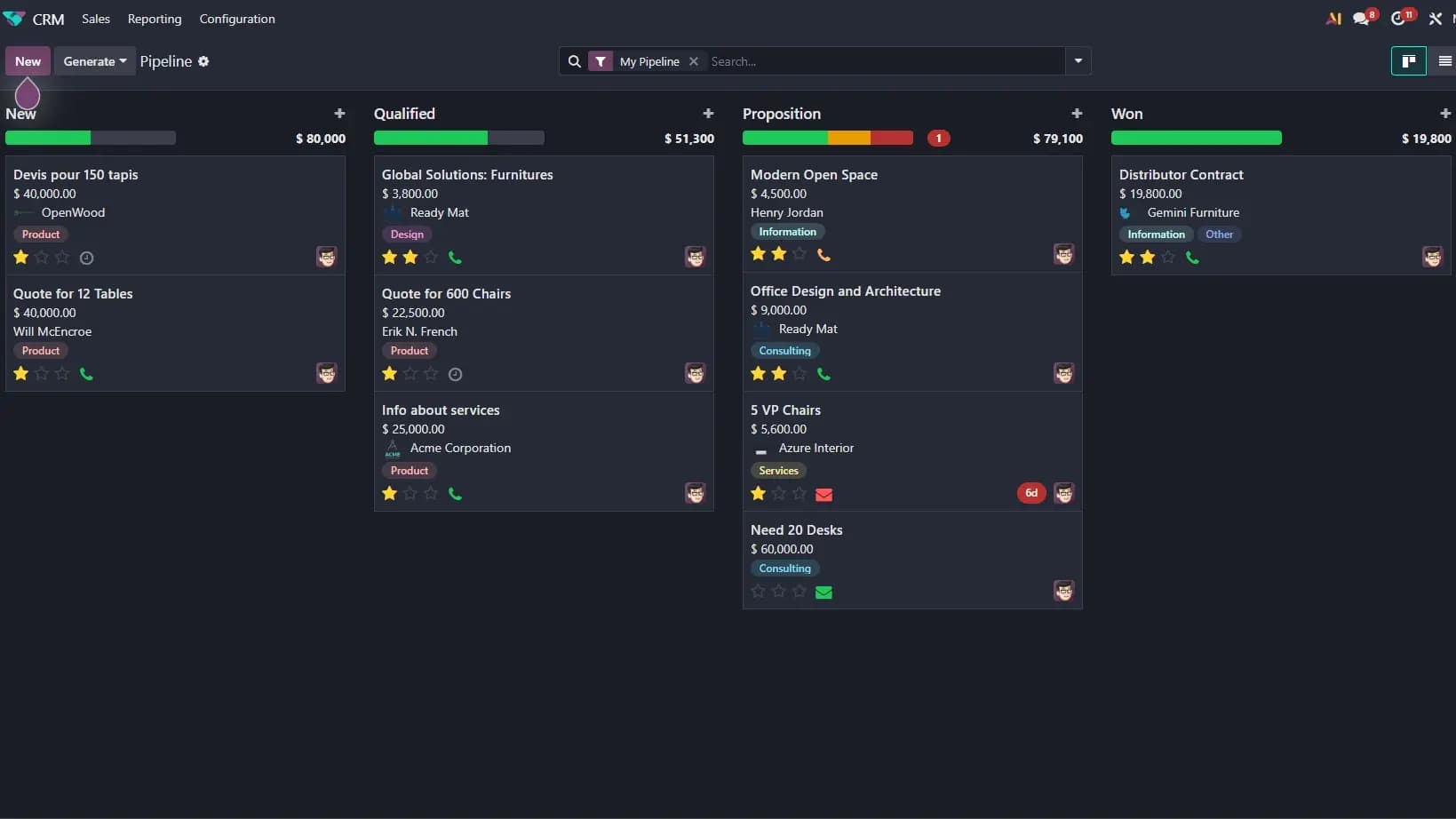
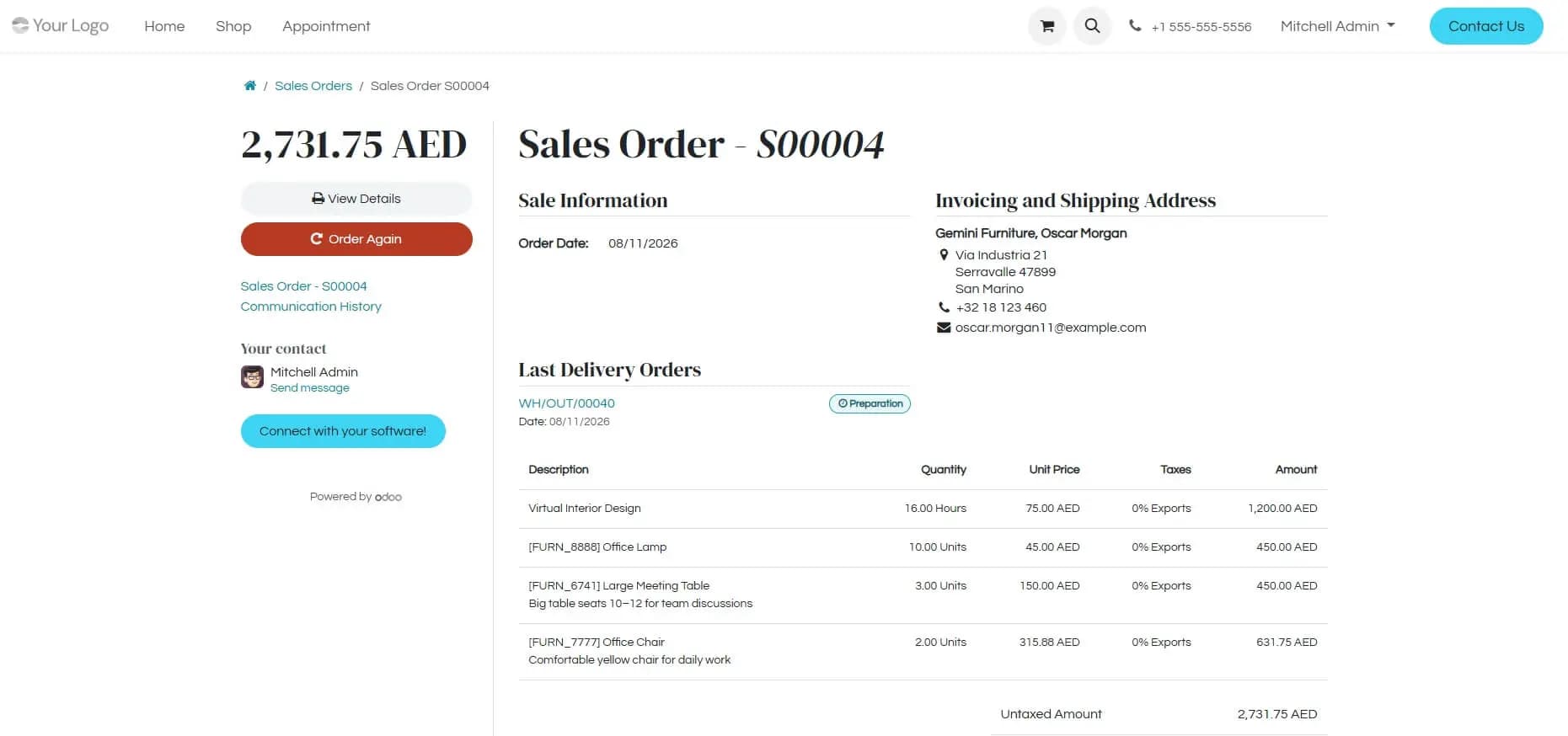
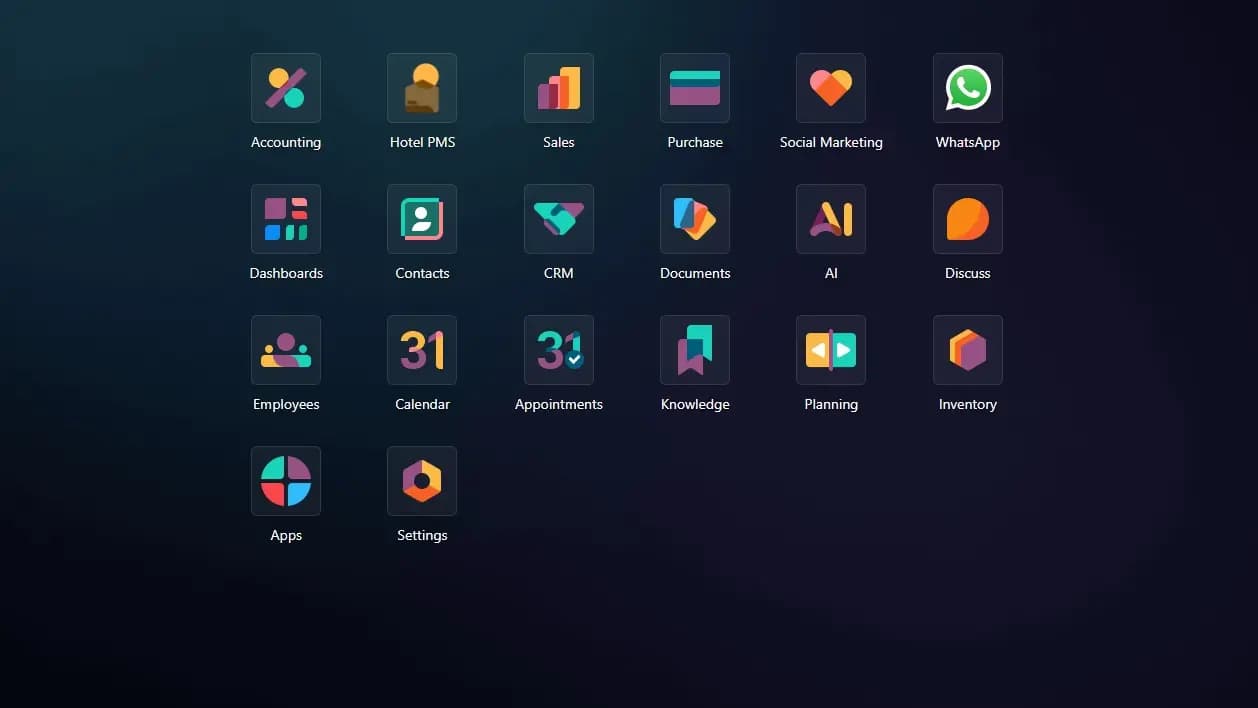
Where the work happens
Works where your team does.
The same operation on a desk, in a hand and on the floor. One login, and the same records behind all three.
Web and desktop
Nothing to install for office and finance work.
Mobile app
Approvals, sales and site work from a phone.
Warehouse and shop floor
Scanner and tablet screens built for standing up.
Across your operation
Follow the work, not the app list.
Pick a flow and see what changes for the business.
A quotation becomes an invoice without anyone retyping it.
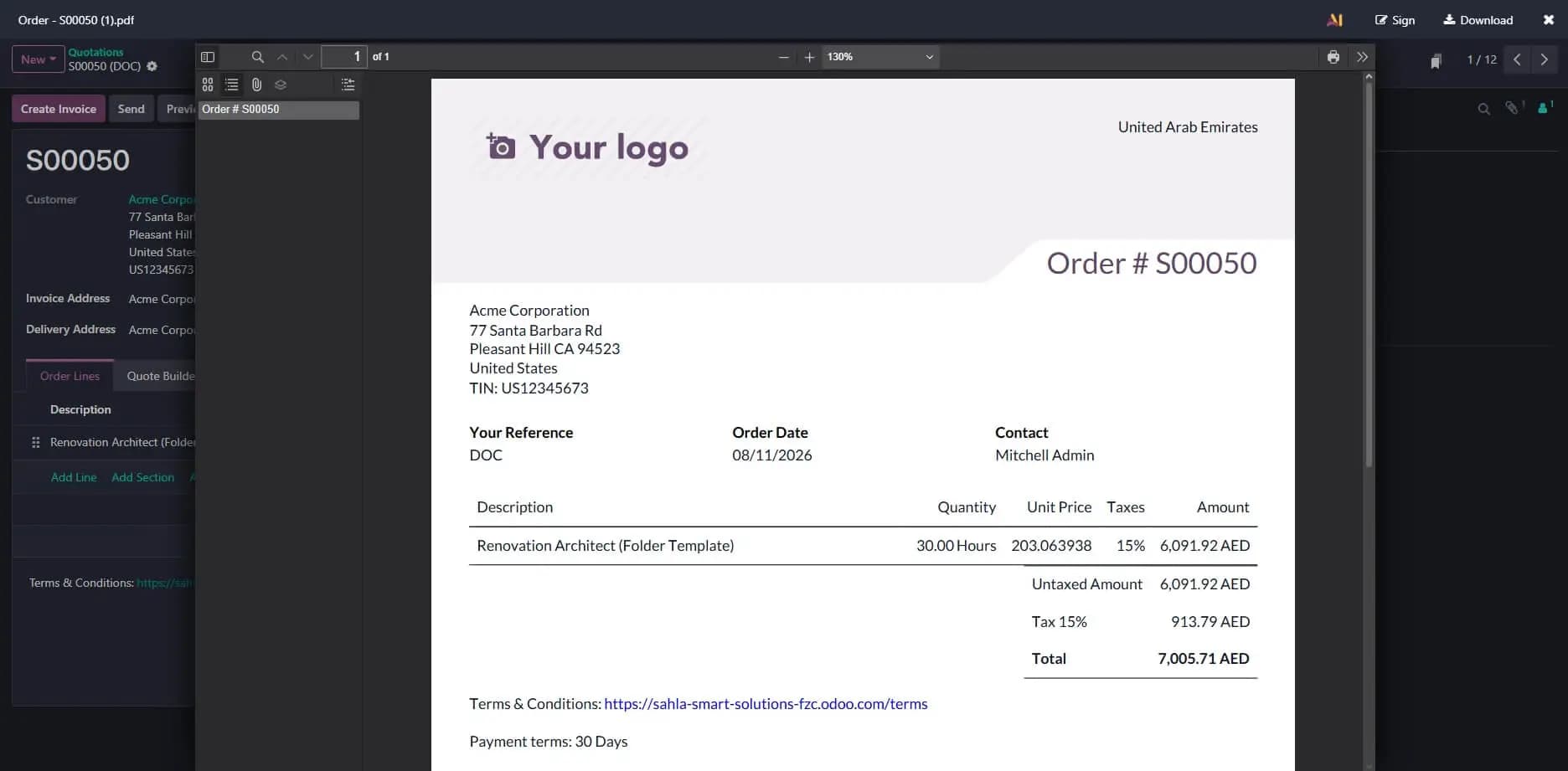
A quotation becomes an invoice without anyone retyping it.
Anyone can install Odoo. We make a business run on it.
Where the value is made
How we make it work for you.
Out of the box, Odoo is one-size-fits-all. What it does not know is your approval rules, your cost model, or the report your board actually reads.
- Implementation and customizationThe core build, shaped to how you run — not to how the demo runs.
- Third-party integrationsConnect what you already use, including where no connector exists yet.
- Custom reporting and dashboardsThe numbers your managers ask for, read off live data.

Odoo — the base platform you start with.

Sahla — we make it fit your workflows.
How we work
You always know what to expect.
Five stops, in the same order, on every engagement. What separates one partner from another is what happens after the fifth.
- Scope
- Build
- Migrate
- Train
- Go-live
- A typical partner ends here
- Stabilization and adoption review
- Success and periodic support
- …and still supported.
You always know what is happening, and when
The next step and its owner are agreed before it starts, so nobody discovers a dependency in week six.
We are there when something breaks
After go-live the same team stays on it — the people who built the thing, not a handover to a queue.
Migration is engineering, not export-import: we cleanse, map and reconcile against your own balances before cutover.
Proof
Six properties, one set of numbers.
Multi-property hospitality group, KSA. Anonymized at the client's request.
Before
Bookings scattered across OTA channels, a regional PMS and spreadsheets. Six properties each reporting their own numbers on their own schedule, and group revenue known about three weeks after month-end.
After
One source of truth across all six properties. The OTA channels and the PMS feed Odoo through integrations we built for them, and group revenue and cost are visible the next morning.
Live 14 months, still supported.
How the group's data actually connects
Clients
Operations already running on it.
Businesses whose day-to-day now goes through the Odoo we built with them.
Think Odoo is the right level for your business?
Questions we get
Before you book the session.
No. Under about ten people with one simple flow, a lighter setup is cheaper and faster. And if you need automated multi-entity consolidation or heavily automated manufacturing, you are looking at a tier above Odoo. We say so in the first session.
Read: You may not need an ERP yetCommunity is free and capable, but you lose the mobile apps, studio, several accounting features and the official support path. For a business running real operations, Enterprise is usually the cheaper decision once support and staff time are counted.
Glossary: OdooScope drives it, and how much custom work your operation genuinely needs — not user count. After the readiness session you get a fixed price for a defined scope, and a written list of what that price excludes.
One to three months for a small scope, three to five for mid-size, six to nine for a large multi-entity or manufacturing environment. Data quality is the most common reason a project moves within that range.
Yes, and often you should. We scope by business flow, so finance and sales can go live first with inventory or manufacturing following once the first flow is stable.
Less than you think. Most requests are configuration. Where custom code is the right answer, it gets a named owner and a maintenance consequence agreed in writing before it is built.
Yes. That is a normal outcome, not a compromise. Where no native connector exists we build one — a hospitality group we work with runs its property system and OTA channels straight into Odoo this way.
Glossary: Systems integrationCustomers, suppliers, products, open transactions, stock positions and opening balances as a rule. History is migrated where it is worth the cleansing effort. We reconcile everything against your own balances before cutover.
Glossary: Data migrationA stabilization period with the same team, then a support plan with periodic reviews. Adoption is checked per role rather than assumed.
Yes. We first work out what is configured, what is customized and what is actually being used, then tell you honestly whether to stabilize it or rebuild parts of it.
Find out whether Odoo fits the way your business needs to run.
We go through your operating requirements, the likely scope, what could go wrong in the implementation, and whether Odoo is the right level of system for you.
- A working discussion, not a product demo.